Hello,
I have been able to log into my Jackson National Life account, but certain information is missing, and there appear to be errors on the Site:
1. Missing Financial Data, Pre-2005: This Policy was opened in 1990, but per the interface, data is available only since 2005, and in reality, the most recent transaction data is from 2012. This is less than half the lifetime of the Policy. Please make the full transaction history available online, or send it to me in a spreadsheet format (XLSX, CSV, etc.).:
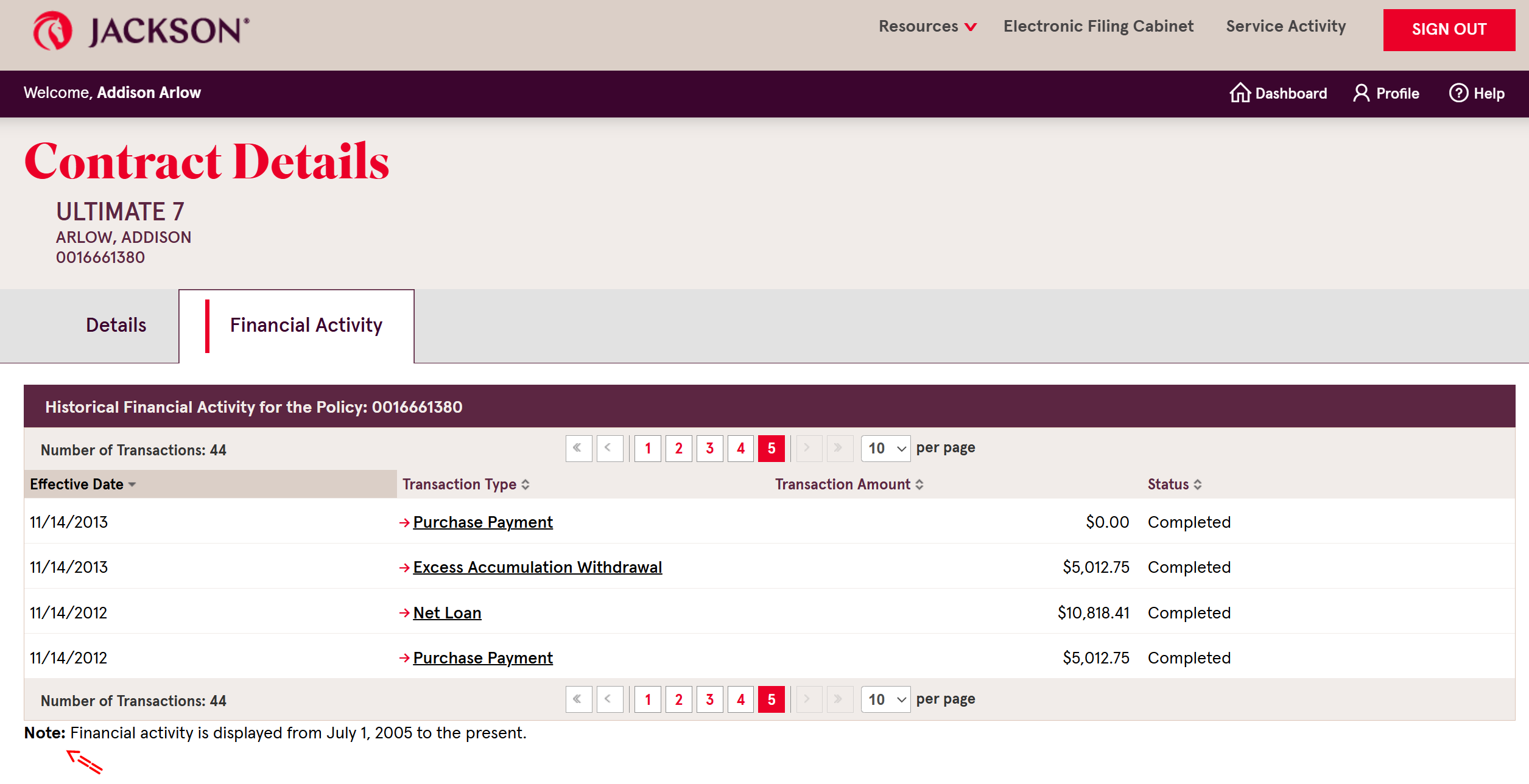
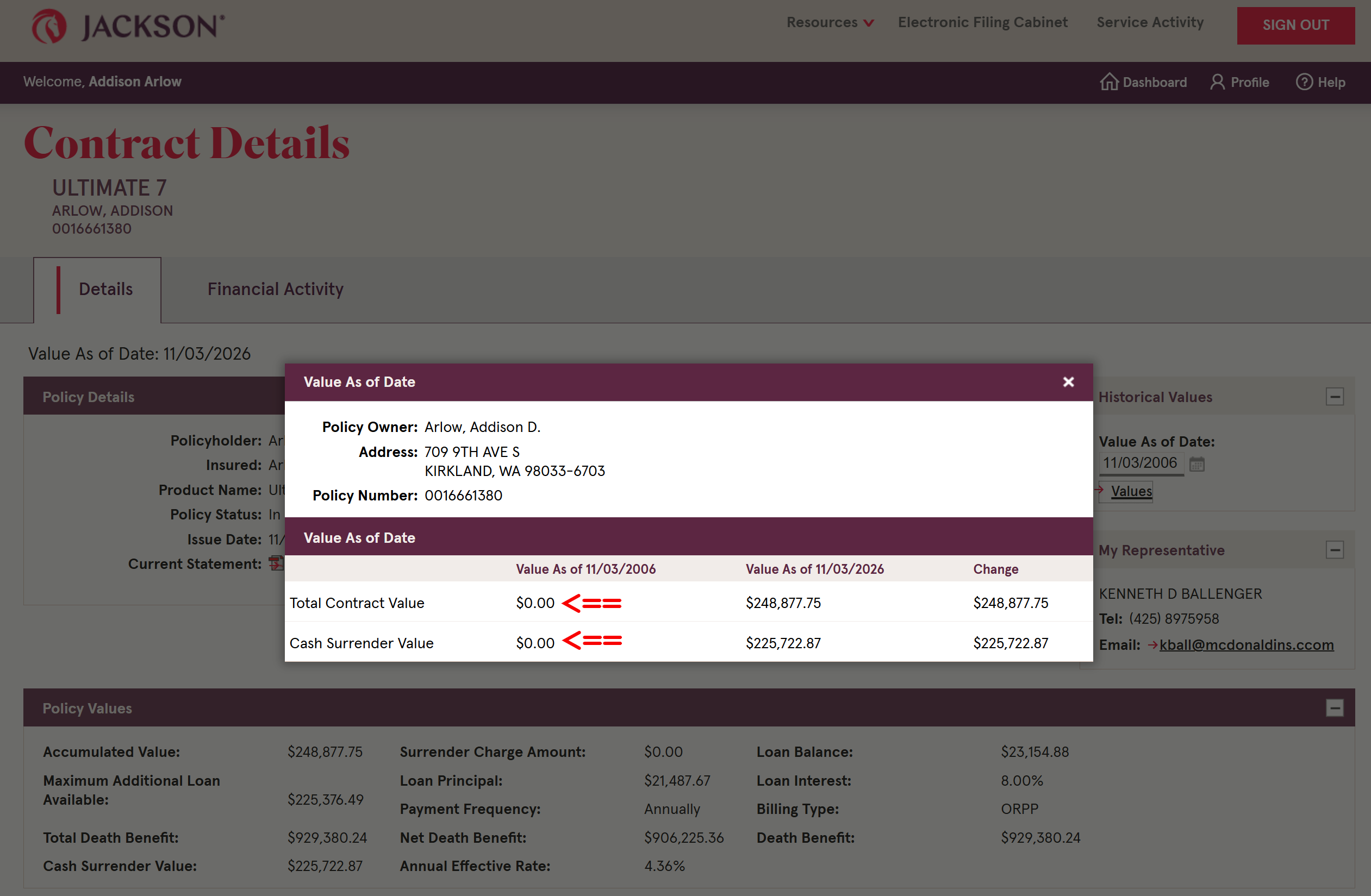
2. Null “Value As Of Date” Calculations: Even for dates post-2005 (and dates over which the policy surely had contract/benefit/cash-surrender value), the “historical values” modal shows zero. Please correct this:
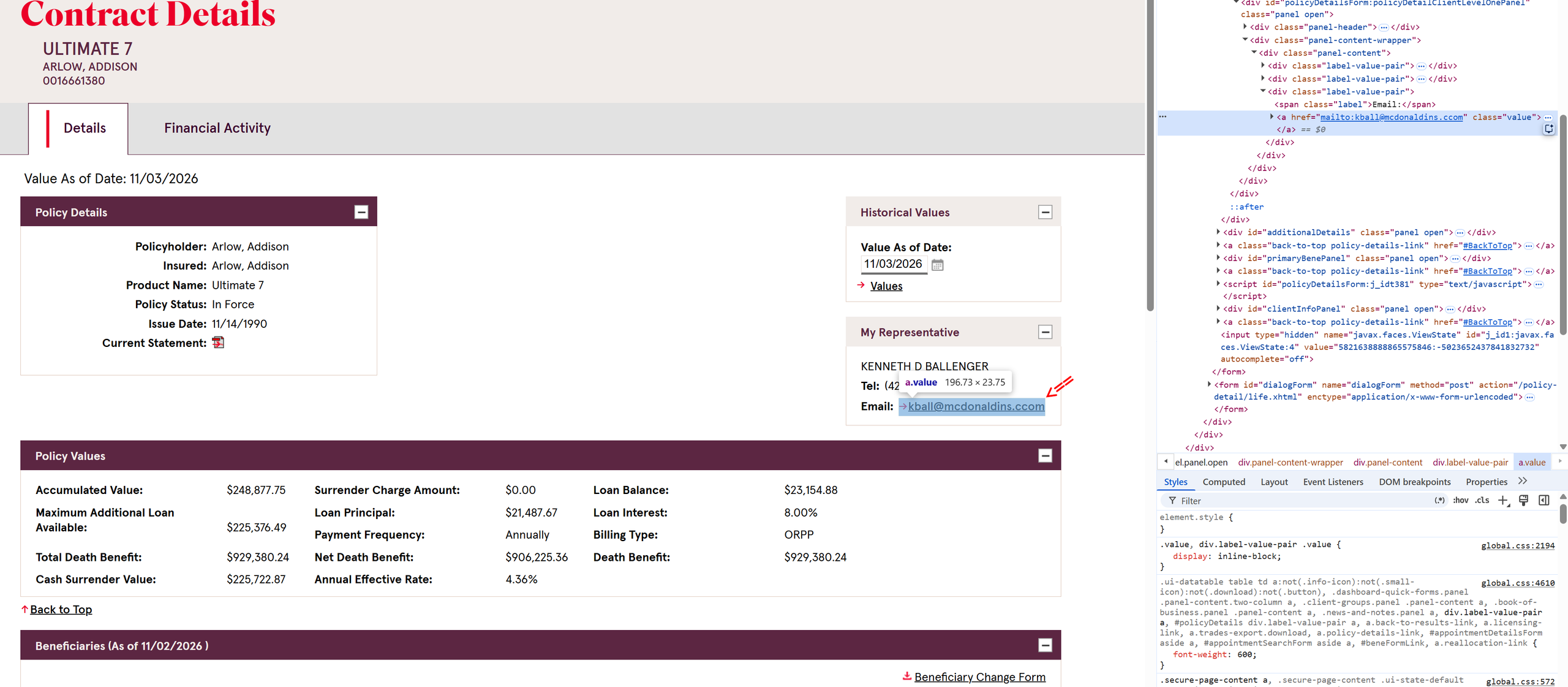
3. Typo in TLD (Top-Level Domain) For Contact Email: The email address for Mr. Kenneth Ballenger is listed as “kball@mcdonaldins.ccom” (repeated “c” in the “.ccom”). This is a typo and should be corrected. Best practices in input validation can catch these sorts of errors:
Overall, my goal is to evaluate the performance of the Policy as benchmarked against a low-cost S&P 500 ETF, such as Vanguard’s VOO (by far the largest ETF by AUM in the world). At a glance, it appears that the Policy has dramatically under-performed this very simplistic investment strategy (and a strategy which, over the timeline of a typical human lifetime, is low-risk). For example, on 2014-01-01, the cash surrender value was $153,935. By 2026-11-03, it had grown to $225,723 (all values nominal). If that sum had been invested in an S&P 500 index fund in 2014, it would have grown in value to ~$485,000 (reinvestment of dividends would bring that up to ~$653,000). Although I don’t have visibility into the complete transaction history, it’s my guess that, if each premium payment had been instead used to purchase a simple index fund, the total return would significantly exceed the present surrender value and in fact also exceed the death benefit. Of course, Jackson bears the risk of an untimely death resulting in early payment of a death benefit in excess of accrued premiums and return-on-investment, but over a large number of insureds, that risk should be small and manageable.
Thank you in advance for providing the financial records related to this Policy,
-Addison Arlow